Services / Restorative / Root Canal Treatment

Root Canal Treatment

Root canal treatment can relieve pain and help preserve a tooth with inflamed or infected tissue inside it.

Treating the inside of a tooth

What Is a Root Canal?

Inside a tooth is soft tissue called the pulp, containing nerves and blood vessels. Decay, cracks, or injury can cause inflammation or infection. Root canal treatment removes affected tissue, cleans and seals the canals, and can help preserve the tooth. Treatment may take one or more visits, depending on the tooth and its condition.
Request an Appointment

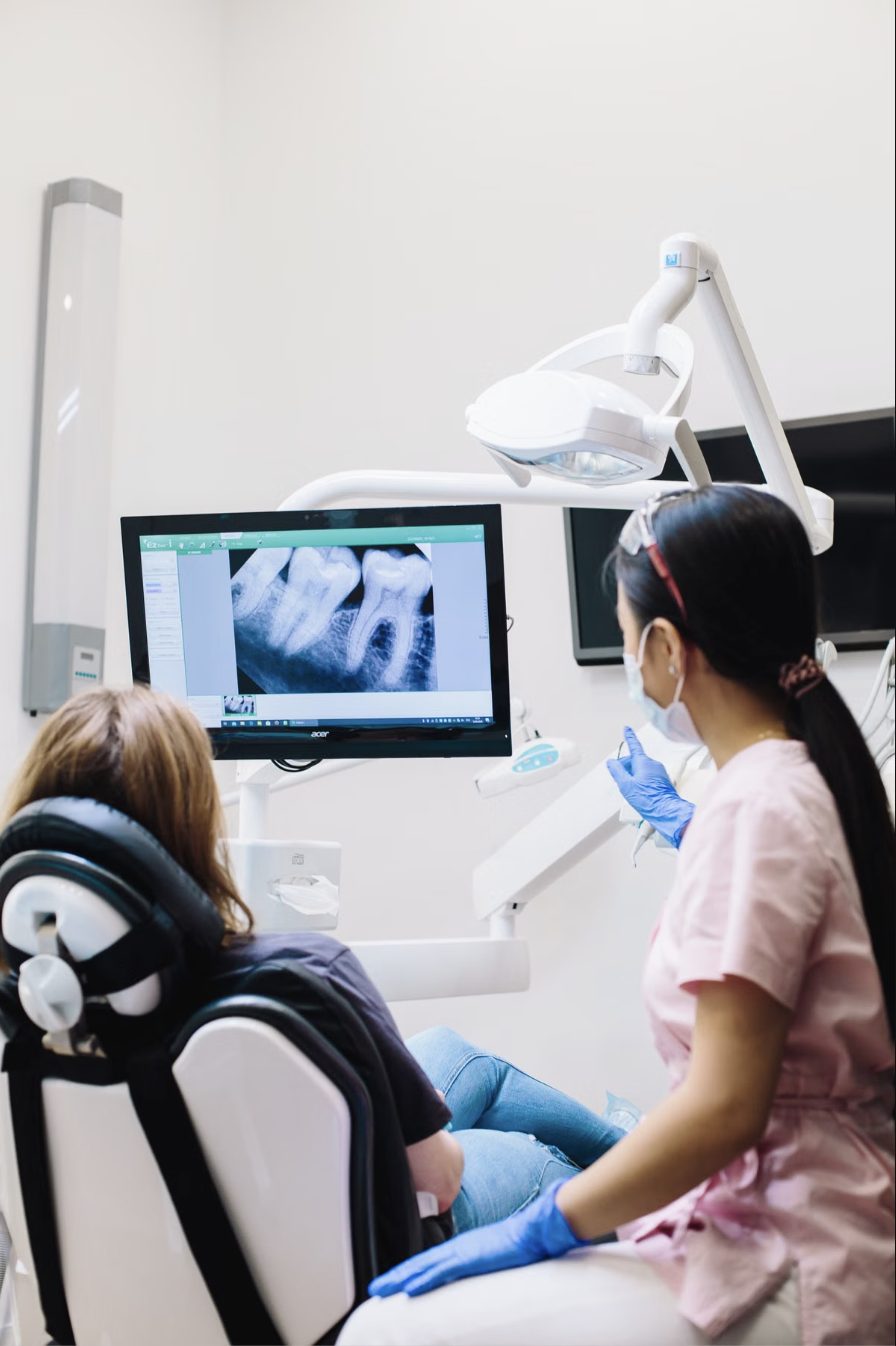
Digital X-ray of tooth roots reviewed chairside

Symptoms that need an assessment

Warning Signs
  • Throbbing pain that wakes you at night or lingers after hot or cold
  • Pain when biting or pressing on a tooth
  • A pimple-like bump on the gum near a tooth
  • A tooth turning gray or dark
  • Swelling in the gum or face — contact us promptly; trouble breathing or swallowing requires emergency medical care
  • Sometimes: nothing at all — some infections show up only on X-rays
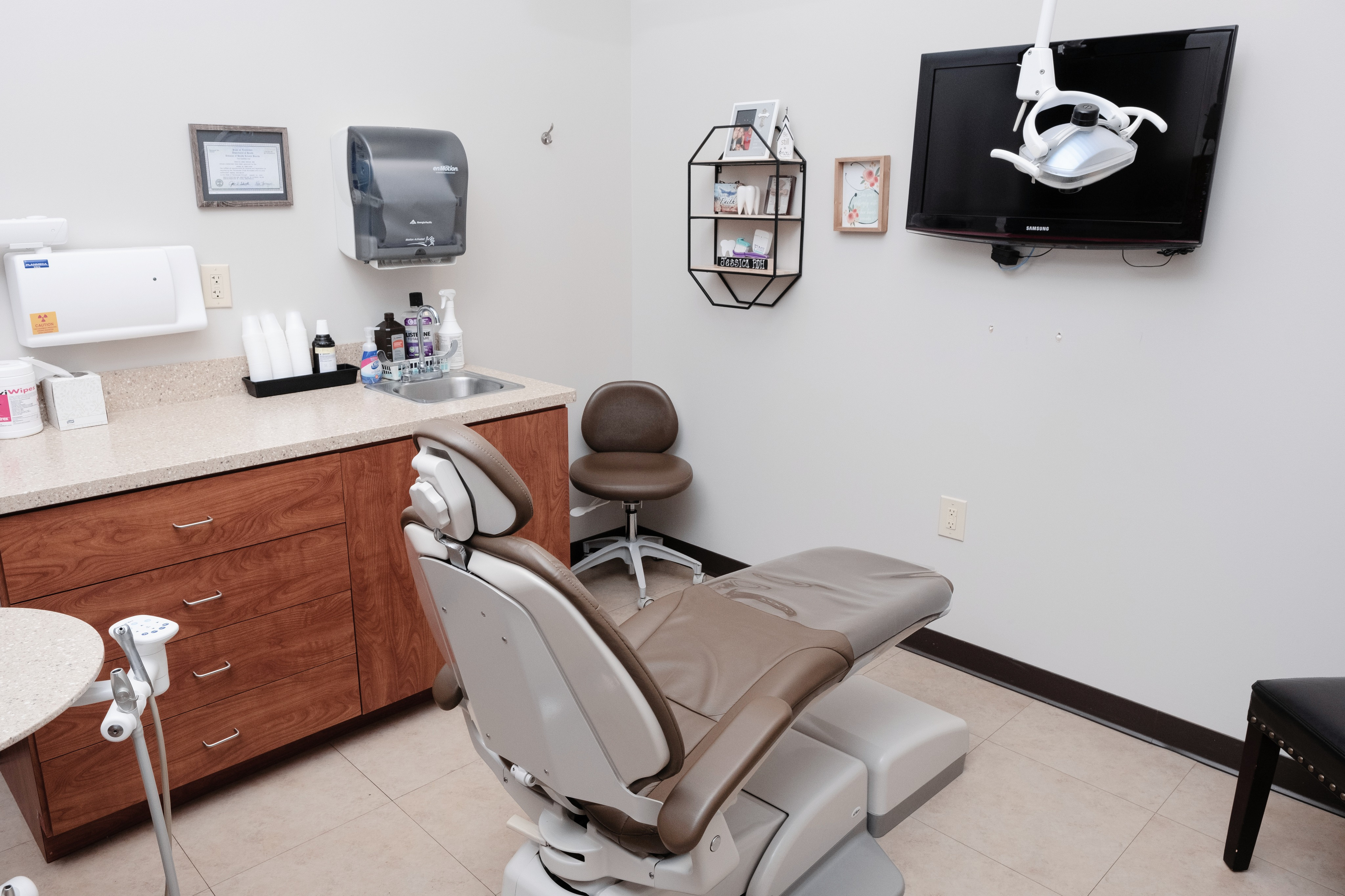
Treatment room in our Mt. Juliet office

What to expect

The Process
1

Diagnosis and Numbing

An examination, appropriate tests, and X-rays help identify the cause of the problem. We use local anesthetic and check your comfort before treatment.

2

Cleaning the Canals

The inflamed or infected pulp is removed and the canals are cleaned and disinfected. You may feel vibration; tell us about discomfort so we can pause and adjust.

3

Sealing

The canals are filled and sealed. A suitable final restoration and ongoing care help protect the treated tooth.

4

Protecting the Tooth

We plan the final restoration, often a crown for a back tooth, based on its location and remaining structure. This helps protect the tooth during chewing. Crown options include CEREC for suitable cases and laboratory-made crowns; the timing depends on the root canal treatment and the tooth’s condition.

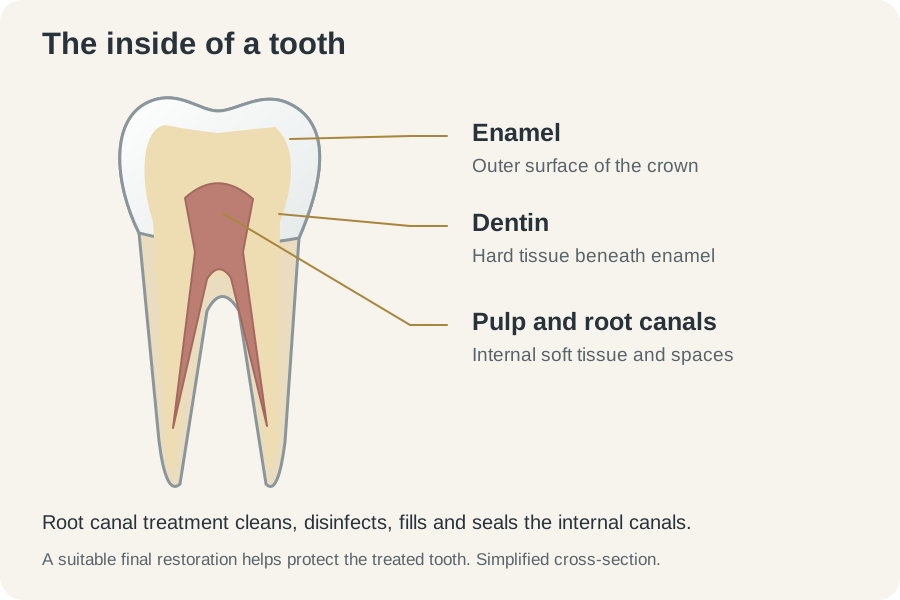
Tooth cross-section showing enamel, dentin, pulp chamber and root canals.
Root canal treatment addresses the internal pulp and canals. This is a simplified anatomy diagram, not a treatment result. View full-size image

When we send you to a specialist

Specialist Referrals

Many root canals can be treated in our office. Severely curved, calcified, or unusually complex canals may need care from an endodontist using a microscope. We’ll explain any recommended referral before treatment.

Common questions about root canals

Does a root canal hurt?
We use local anesthetic and check your comfort throughout treatment. Mild soreness can occur afterward. Follow your aftercare instructions and ask which pain relief is appropriate for you.
Wouldn't it be simpler to just pull the tooth?
The best choice depends on the tooth’s condition, prognosis, and your needs. We’ll compare root canal treatment and restoration with extraction, including any replacement options, costs, and ongoing care.
Is a root canal covered by insurance?
Your plan may help cover root canal treatment. We’ll check benefits, any approval requirements, and your estimated share, including any restoration needed afterward.

Tooth pain deserves an assessment

Get an assessment and a clear treatment plan

Your preferences are saved for up to 180 days. We do not use analytics or advertising cookies.

Privacy policy